The Himel HDM3 MCCB Explained: How It Works and How to Size It
If you build distribution boards or motor-control panels in Singapore, the moulded case circuit breaker (MCCB) is the workhorse of your incomer and main feeders. The Himel HDM3 is one of the most commonly specified MCCBs in local panels because it hits the practical sweet spot: a compact frame, a sensible breaking-capacity range, and adjustable trip settings — all in a genuine, standards-compliant package that is readily available off local stock. This guide keeps it plain and practical: what the HDM3 actually does, how to size and set it, and how to avoid the counterfeit and lead-time traps that hurt projects.
What an MCCB is — and what the HDM3 does
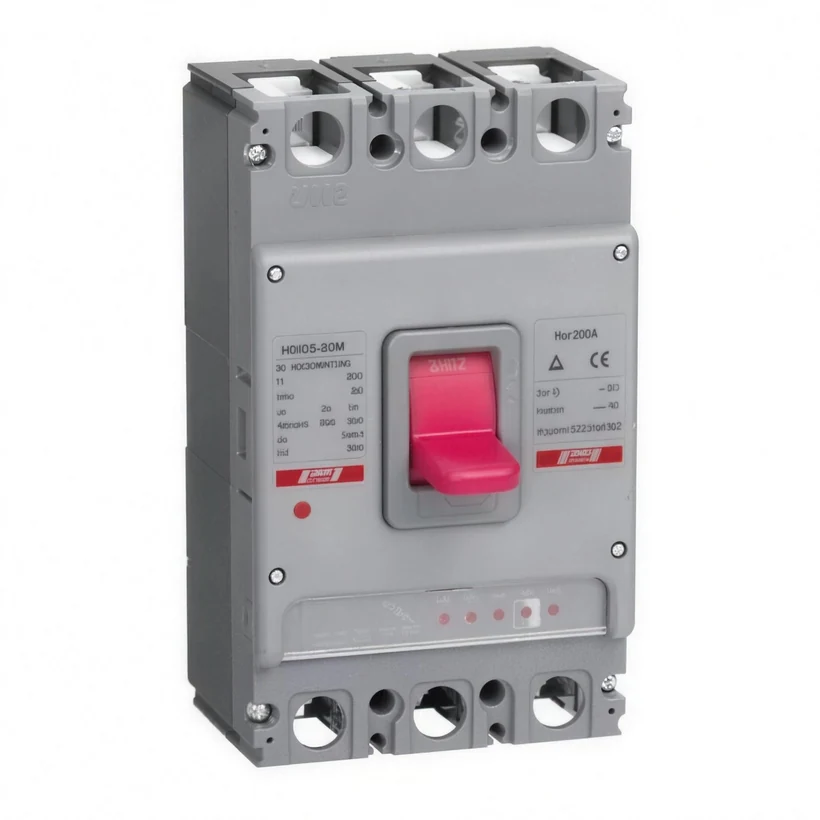
An MCCB is a switching and protection device that carries normal load current and automatically opens the circuit under two fault conditions: sustained overload (a current above the rated value for too long, typically from an overloaded cable or motor) and short circuit (a very high, near-instant fault current). The Himel HDM3 combines both functions in a single moulded case — thermal-magnetic sensing for the overload, and a fast magnetic element for the short circuit — so a single device protects the downstream cable and equipment.
Compared with a miniature circuit breaker (MCB) like the Himel HDB9H, an MCCB handles much higher current, offers a higher short-circuit withstand, and — importantly for panel builders — usually provides adjustable trip settings so one frame can be tuned across a range of loads. That flexibility is a large part of why the HDM3 shows up on so many main-switch and sub-main positions.
HDM3 at a glance (indicative — confirm exact ratings with Jason)
- Type: thermal-magnetic moulded case circuit breaker (MCCB)
- Poles: commonly available in 3P and 4P
- Frame & rated current: a range of frame sizes spanning roughly 16–630A depending on model
- Standard: designed to IEC 60947-2 for industrial circuit breakers
- Adjustable protection: selectable overload and short-circuit trip settings on the relevant models
Understanding breaking capacity (the number that keeps panels safe)
The single most misunderstood spec on an MCCB is its breaking capacity — the maximum fault current the breaker can safely interrupt without being destroyed. It is quoted in kilo-amps (kA) and referenced to a voltage (for example, at 415V AC). Two figures matter:
- Icu (rated ultimate short-circuit breaking capacity) — the maximum fault the device can clear once; after that it may need inspection or replacement.
- Ics (rated service short-circuit breaking capacity) — the fault level the breaker can clear and still return to normal service, usually expressed as a percentage of Icu.
Here is the rule that protects a project: the breaker's Icu must be equal to or greater than the prospective short-circuit current at that point in the installation. If the fault level at your board can reach 25kA, a 10kA-rated device is dangerous — under fault it can fail catastrophically rather than clear cleanly. The HDM3 range is offered in multiple breaking-capacity classes so you can match the device to the fault level at the incomer, the sub-mains, and the final circuits. When in doubt, share the upstream transformer/supply details with us and we will help confirm the correct class.
The protection features that matter on site
Overload protection
The thermal element responds to sustained over-current with an inverse-time characteristic — the bigger the overload, the faster it trips. On adjustable models you set the overload pick-up to match the cable and load you are actually protecting, which avoids nuisance trips on start-up while still protecting the cable from long-term overheating.
Short-circuit protection
The magnetic element reacts almost instantly to high fault current, disconnecting before let-through energy can damage cables, busbars or connected equipment. Correct short-circuit settings also support discrimination (selectivity) — so a downstream fault trips only the local breaker, not the main incomer, keeping the rest of the board live.
Isolation and switching
Beyond protection, the HDM3 doubles as a manual isolator for safe maintenance, and accepts accessories such as auxiliary and alarm contacts, shunt trips, and undervoltage releases — useful when the panel needs remote tripping or status signalling.
How to choose the right HDM3 for your panel
A quick, reliable selection sequence:
- Rated current (In): pick a frame and rating at or just above the design load current of the circuit — not so far above that overload protection becomes meaningless.
- Breaking capacity (Icu): match or exceed the prospective fault current at that point in the installation.
- Poles: 3P for three-phase loads, 4P where the neutral must be switched/isolated.
- Adjustability: choose an adjustable model where loads vary or where you need to fine-tune discrimination.
- Accessories: specify auxiliary/alarm contacts, shunt trip or UVR up front if the panel logic needs them.
Getting these five right the first time avoids re-orders and keeps the panel build on schedule.
Why genuine sourcing matters
Counterfeit and grey-market MCCBs are a real risk in the region, and a fake breaker is worse than no breaker — it looks compliant but may not clear a fault at its stated kA. As an authorised Himel distributor in Singapore, Trans-Digi Global supplies genuine HDM3 breakers with the correct ratings and documentation, backed by manufacturer quality assurance and local technical support. When your as-built pack needs the real device with the real spec, that traceability is what protects both the installation and your sign-off.
Get the right HDM3 — fast
Tell us the rated current, the number of poles, and the fault level (or the upstream supply detail) and we will confirm the correct HDM3 model, breaking-capacity class and any accessories, then quote from local stock with same-business-day support. Browse the full spec on the Himel HDM3 MCCB product page or across our online shop, or message Jason directly with your requirement.